
The 1951 Refugee Convention and its 1967 Protocol: Questions and Answers
2011
The most frequently asked questions about the treaty and its protocol.
The most frequently asked questions about the treaty and its protocol.

Each chapter takes a subject, such as Legal Status or Psychosocial Well-being, and discusses it from the point of view of children's needs and rights. Chapter 9 is on the right to education.
This article is based on a year-long study of the right to education for child refugees and migrants from other African countries who find themselves in South Africa.
A short article on natural disasters and internally displaced persons’ rights. Includes a section on access to education.
A short articlet on the barriers internally displaced persons are likely to face with regard to education.
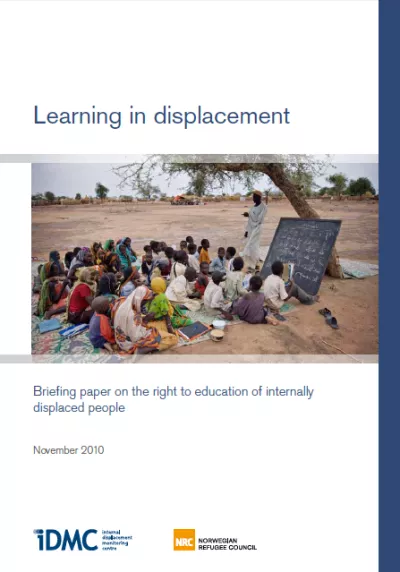
This paper introduces a series of case studies looking at education for Internally Displaced Persons (IDPs).
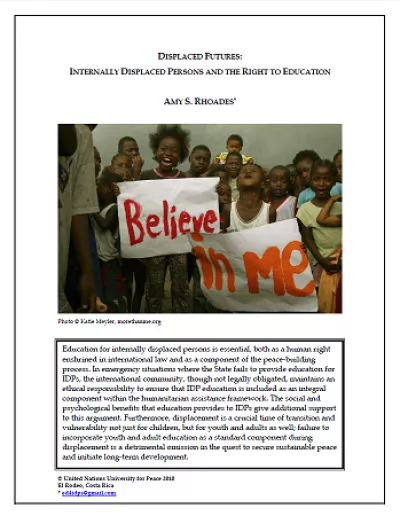
This paper argues that education for internally displaced persons is essential, both as a human right enshrined in international law and as a component of the peace-building process.
Francis M. Deng, the Representative of the UN Secretary-General on Internally Displaced Persons (1992-2004), developped these guidelines in 1998.
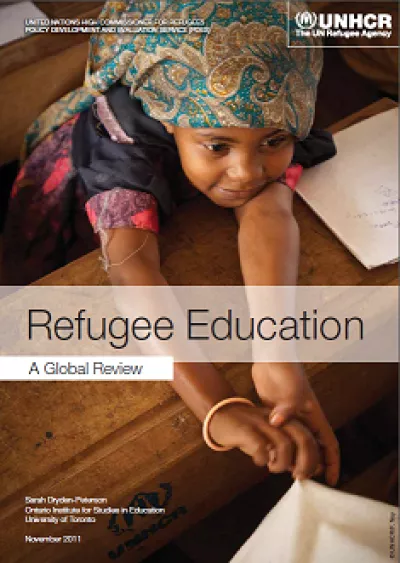
Published in November 2011, this report investigates the worldwide state of refugee education.
This report focuses on those who have crossed national borders, who generally are at risk of marginalisation and specifically to discrimination in the provision of education.